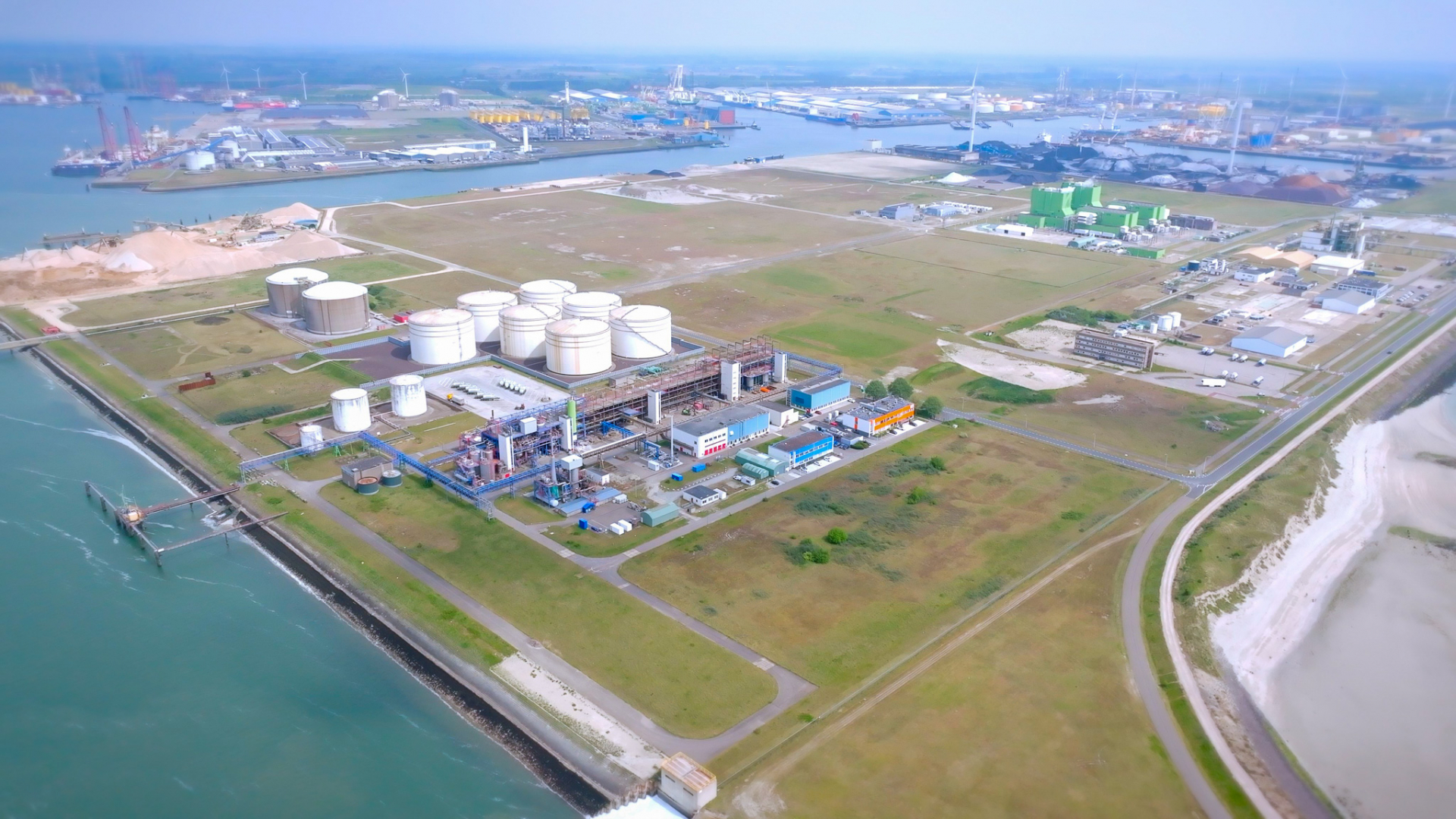
LBC Tank Terminals is working on a Green Energy Hub for ammonia, hydrogen, and CO₂ in Vlissingen.

LBC Tank Terminals is developing plans in Vlissingen for a terminal for the import and storage of green ammonia, combined with CO₂ storage and the production of green hydrogen. The development is planned for the Sloehaven in North Sea Port and fits within the broader strengthening of the Scheldt Delta region as a hub for energy, raw materials, and industrial infrastructure.
LBC is active worldwide in independent storage and transshipment services for chemical and new energy products, including ammonia and CO₂. In Vlissingen, the company aims to realize one of the first terminals for large-scale import of green ammonia. This ammonia can subsequently be converted into green hydrogen using a cracker. Through the Gasunie backbone, this hydrogen can become available to customers in the region and in Northwest Europe.
What does this mean for the region?
This project is relevant to our region because it adds new infrastructure for energy carriers that play a key role in the industrial transition. The combination of import, storage, and conversion at a single location will contribute to the sustainability of the industry and to the further development of the region as an energy and industrial cluster.
At the same time, the project demonstrates how Vlissingen's strategic location can be utilized for the supply, processing, and distribution of new energy flows. In doing so, the region gains not only additional storage capacity but also a potential link in the future hydrogen supply for a larger area in Northwest Europe.
According to LBC Vlissingen, a development of this magnitude requires collaboration between companies, infrastructure parties, and government authorities. It is precisely in this preliminary phase, where preconditions and connections must be established, that the company also sees a connecting role for Smart Delta Resources.
Core data project LBC Vlissingen
- Location: Sloehaven, Vlissingen
- Initiator: LBC Tank Terminals
- Type of development: terminal for the import and storage of green ammonia, CO₂ storage, and production of green hydrogen
- Ammonia storage: 150,000 m³ tank capacity
- CO₂ storage: 30,000 m³ tank capacity
- Hydrogen production: cracker for hydrogen, with 100,000 tonnes of hydrogen production in the first phase
- Ammonia throughput: up to 3.5 million tonnes per year
- Target market: regional customers and Northwest Europe via the Gasunie backbone
- Intended schedule: operational in 2030, simultaneously with the completion of the backbone