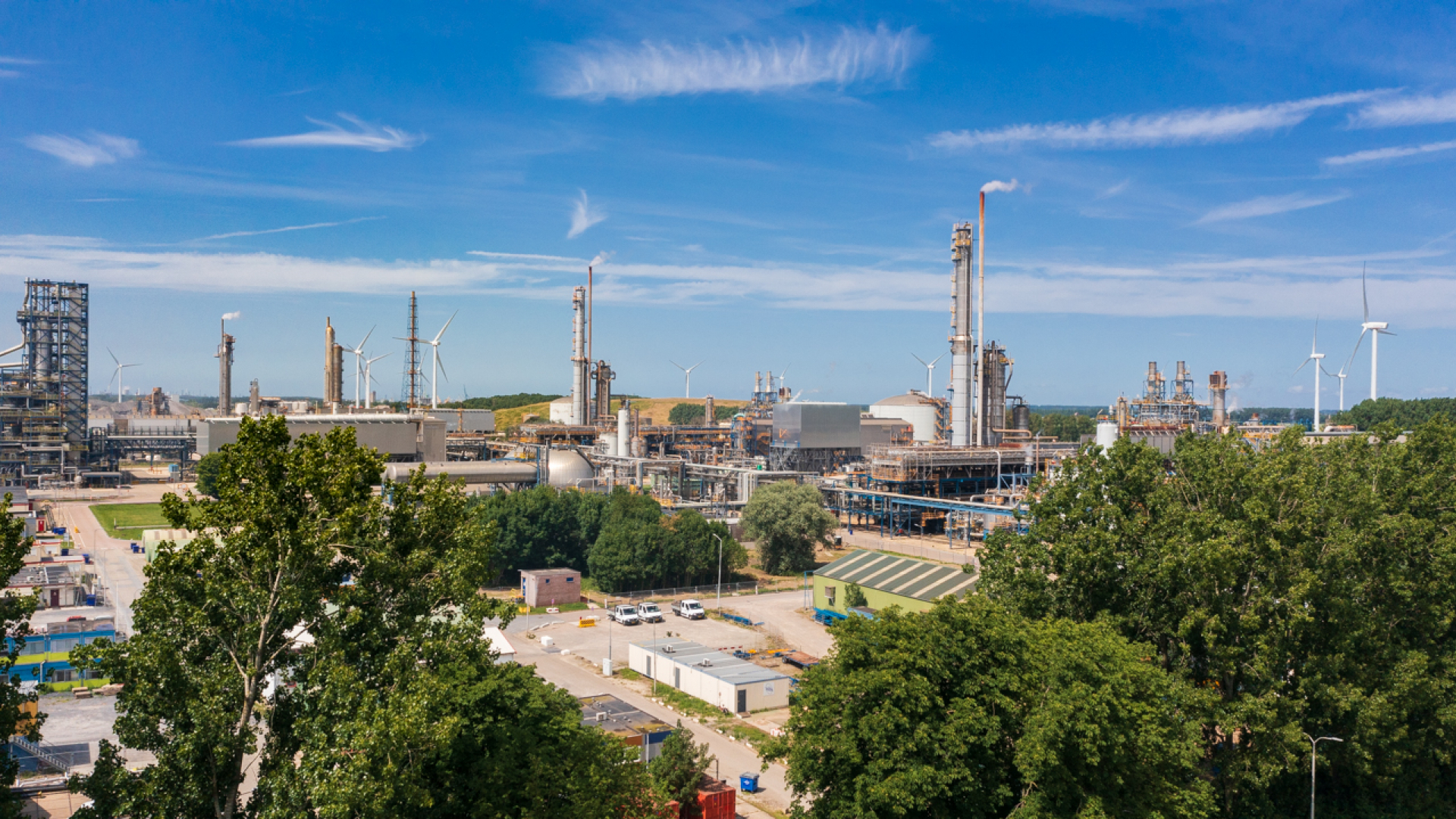
Emissions above Yara Sluiskil are decreasing

On October 15, Minister Wiersma of the Ministry of Agriculture, Fisheries, Food Security and Nature laid the foundation stone for the new WESP facilities at Yara Sluiskil. The two facilities, which will be operational in 2026 and 2027 respectively, will further reduce nitrogen emissions. The technology sets a new standard for European fertilizer production and also ensures the disappearance of the iconic plumes at the nitrate plants.
This way, the surrounding area will literally witness Yara's reduction in emissions. The Norwegian parent company is once again investing heavily in its Sluiskil production site. The facility, which is the largest ammonia and fertilizer production site in Europe, is considered strategically important. In addition to substantial investments in increased flexibility, CO2 reduction, low-carbon hydrogen production, and water recycling, Yara is now taking the next step in further nitrogen reduction. A so-called Wet Electrostatic Precipitator (WESP) installation is being built, in which a washing fluid and an electrostatic field are used to wash out the last traces of ammonia and nitrate-containing dust in the plume of the nitrate factories.
The new installations—the first one at nitrate plant 3 will come online in 2026, followed by a second one at the other plant in 2027—will reduce emissions by an impressive 60 tons of ammonia and 160 tons of nitrogen dust per year, or 20 percent of Yara Sluiskil's total emissions. This is equivalent to the annual emissions of over 4,500 cows and nearly six full trucks of dust. The dust and ammonia captured in the new installation will be used again as raw material for production. This not only eliminates air emissions but also reuses a waste product as a raw material.
Yara has already successfully applied the technology in Ravenna, Italy. Joris Malcontent, process engineer, says: "During commissioning in Italy, it turned out that the plume's visibility almost completely disappeared. The first successful tests were conducted in Sluiskil in 2020, where we already observed this, but the plume also appears to have disappeared during scaling up." The small-scale test results conducted in Sluiskil have been translated to an industrial scale in recent years. Yara worked closely with the provincial and national governments to implement this technology, which goes beyond legal requirements. The parent company is once again investing heavily with these installations, which together cost 75 million euros. The Ministry of Climate and Green Growth is also contributing with a subsidy.
"Yara is a nitrogen chemistry company, and its products contribute to the strategic autonomy of the Netherlands and Europe. Primarily, fertilizers, which guarantee food security, but also products like AdBlue and NOxCare, which clean up diesel engine exhausts and emissions from power plants, ships, and steel mills, make a vital social contribution," says Managing Director Luc Cattoir.